Living On A Boat Pros And Cons
Living on a boat has real advantages and hard tradeoffs. Use this Sailcation guide to test space, cost, marina rules, weather, safety and daily routines.
Living on a boat pros and cons are easier to judge when you separate the dream from the daily routine: space, costs, weather, marina rules, safety, repairs and the way you actually work, sleep and live.
The good parts are real. You can wake up close to the water, live with less stuff, learn your vessel deeply, meet a boating community and keep your home close to the places you want to explore.
The hard parts are real too. A boat moves, leaks, ages, needs constant attention and usually gives you less space than you expect. Marina permission is not automatic. Weather changes plans. Repairs can interrupt work, sleep and cash flow.
Summary
Summary: Living on a boat can suit you if you want a smaller, more hands-on life and you are ready to manage the boat as both home and machine. It can feel freeing because your space is compact, your routines are simpler and the water is part of everyday life. It can also feel cramped, expensive and tiring if you undercount maintenance, ignore marina rules or buy a boat that looks good in photos but fails the daily test.
Use the pros and cons below as a practical filter before you shop. If the weak point is money, start with the Sailcation guide to the cost of living on a boat. If the weak point is boat choice, compare liveaboard boats before falling in love with a listing. If you are still deciding whether the lifestyle fits, use the yacht living checklist and test the routine first.
The Main Pros
Living aboard can be a good fit when the boat supports your real routine rather than the idea of escape.
You live close to the water
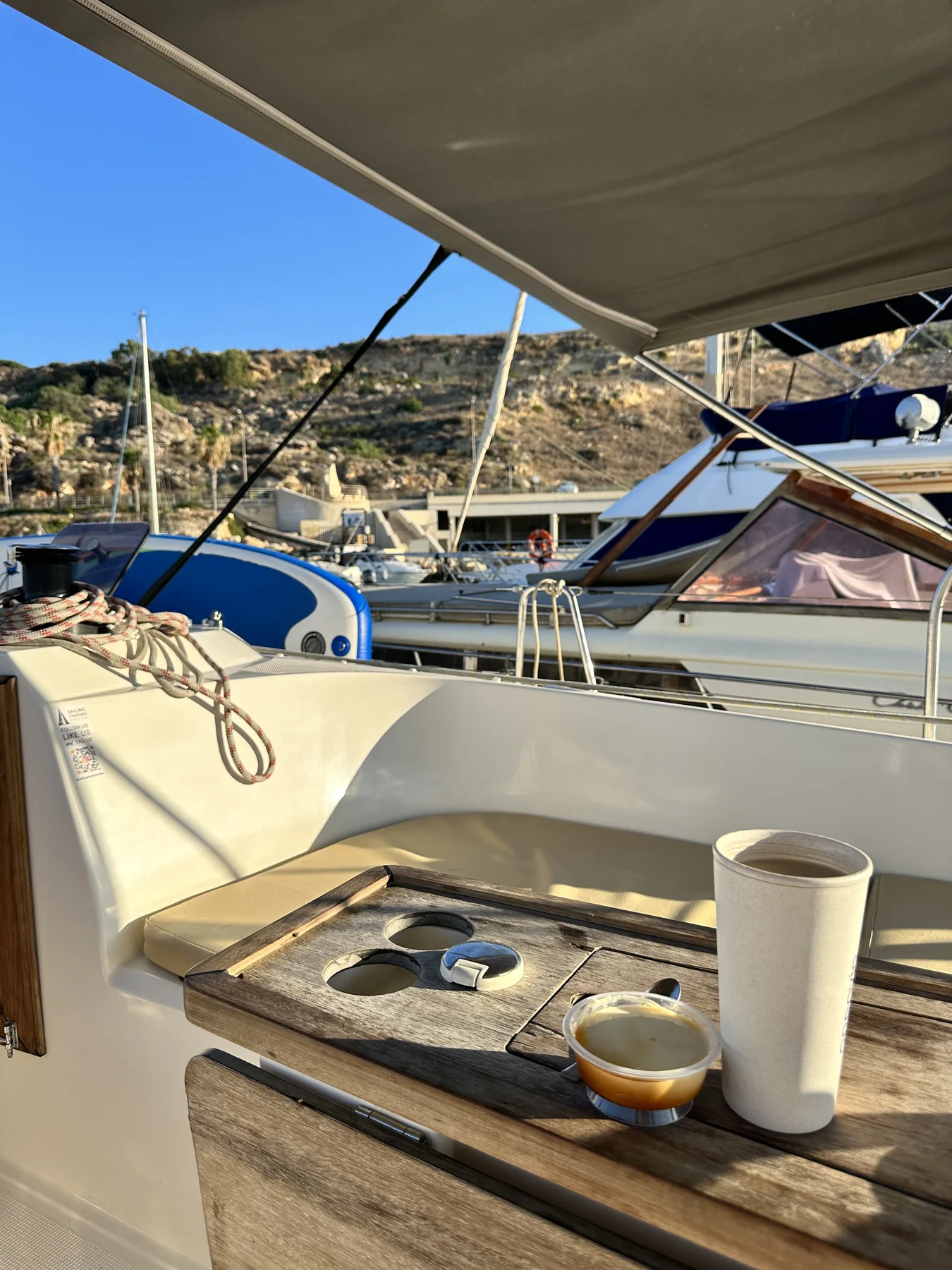
The strongest benefit is also the simplest. Water becomes part of ordinary life. Coffee on deck, evening light in the marina, swimming from the stern, dinghy rides and quiet nights at anchor are hard to recreate in an apartment.
That closeness can change how you spend time. People often go outside more, notice weather more and plan around tides, wind and daylight. For some readers, that is the appeal. The home is not sealed away from the place around it.
You can live with less
A boat forces choices. You cannot keep every spare appliance, box of clothes, hobby tool and “maybe later” item. That can be uncomfortable at first, and then useful. The space pushes you toward what you actually use.
This only works when you treat storage as a design problem. Good boat life is not clutter hidden in every locker. It is choosing fewer things, protecting them from damp and giving the daily items a place where you can reach them without emptying half the cabin.
You learn useful skills
Liveaboard life teaches practical habits quickly. You learn lines, fenders, weather checks, battery state, water levels, pump sounds, smells, leaks, condensation and the small signals that something needs attention.
That can be satisfying if you like hands-on living. It can also make you more independent. The goal is not to become a professional marine technician overnight. The goal is to notice problems early and know when to call help before a small issue becomes a large bill.
You can build a strong marina or anchorage community
Boating communities can be generous because everyone understands that boats create shared problems. People lend tools, share warnings, help with lines and explain local routines. If you are new, that social layer can shorten the learning curve.
The community benefit depends on the location. Some marinas are lively and neighborly. Some are quiet storage yards with slips. Some anchorages have their own culture and expectations. Visit at different times of day before assuming the atmosphere fits you.
You can match your home to a travel or seasonal life
A boat can make seasonal living easier if the vessel, budget and location fit. Some people stay in a marina for work seasons and cruise during breaks. Others keep a shore base and use the boat for long stays. Some treat the boat as the primary home and move carefully between weather windows.
The strongest plans include a backup. If a storm season, repair bill or family need changes the plan, you should know where you can stay, where the boat can go and what money is separate from the boat budget.
The Main Cons
The hard side of living aboard usually comes from the same things that make it appealing: the boat is close to nature, compact and mechanically alive.
Space feels smaller after the first week
Most boats look larger when you tour them than they feel when you live in them. The difference appears when laundry is drying, groceries are stored, wet towels need a place, work gear is out, rain keeps you below and the cabin sole becomes the only walkway.
Headroom, berth shape, galley layout, shower access and locker depth matter more than glossy finishes. If you plan to work from the boat, do not treat the table as an office until you have tested calls, charging, glare, heat, noise and posture.
Maintenance becomes part of home life
A boat is a home, vehicle, electrical system, plumbing system and weather shell at the same time. That means maintenance is not a rare weekend task. It sits inside daily life.
You may need to check bilges, clean strainers, manage batteries, chase leaks, control corrosion, service engines, replace pumps, inspect lines, watch for chafe, ventilate lockers and deal with damp cushions. Some jobs are small. Some are expensive. Many arrive at awkward times.
Costs are easy to undercount
The berth fee or loan payment is only one line. A realistic budget also includes insurance, haul-outs, bottom work, fuel, electricity, water, pump-outs, parts, tools, surveys, registration, safety gear, internet, upgrades and emergency money.
The safest mindset is to price the boring items before the boat. If the monthly plan only works when nothing breaks, the plan is too thin.
Rules vary by place
Liveaboard permission is local. One marina may allow full-time living with a fee and written approval. Another may ban it. A mooring field may have limits. Anchoring rules may change by town, season or waterway. Waste rules also vary, and in the United States the EPA explains that vessel sewage no-discharge zones prohibit sewage discharge in designated waters.
Ask questions before paying deposits. Read written policies. Confirm insurance requirements. If the answer depends on a harbor office, marina manager, local authority or country, do not rely on a forum comment as your only source.
Weather controls more than you expect
Weather affects sleep, movement, docking, dinghy access, power use, moisture, repairs and mood. Wind that feels romantic during a weekend stay can feel different when it hits the beam all night before a workday.
Weather planning should become a habit. In the United States, the National Weather Service marine program publishes forecasts and warnings for coastal waters, Great Lakes, offshore areas and high seas. Use the equivalent official marine forecast source in your location and learn what the warnings mean for your boat, not for an abstract average vessel.
A Pros And Cons Decision Board
Use this board as a first pass before you decide that boat life is either perfect or impossible.
Less clutter and a simpler home.
Tight storage, shared surfaces and few private zones.
Spend rainy days aboard with work gear, groceries and laundry.
Possible lower land-housing costs in some places.
Repairs, marina fees and insurance can erase savings.
Build a monthly and annual budget with a repair reserve.
Water access and marina community.
Liveaboard permission may be limited.
Speak with the marina or local authority before signing.
More connection to the seasons.
Wind, heat, cold, storms and damp affect daily life.
Stay aboard during bad weather before buying.
A compact, scenic base for focused work.
Internet, power and noise can be unreliable.
Test calls, uploads and backup power in the real location.
You may move when the plan allows.
Movement is limited by weather, money, rules and repairs.
Plan a month, then add fallback days and repair money.
What The Pros Feel Like In Daily Life
The best parts of boat life are often small. You notice light on the water before checking your phone. You learn which line taps in a crosswind. You know how much water you have left. You become more careful about power, trash, food and storage.
Those habits can feel calming because the home has clear limits. When you live in a smaller space, the routine becomes visible. You know when the cabin is messy. You know when the batteries need charging. You know when the weather is changing.
For people who like that kind of feedback, a boat can feel honest. It does not let you ignore the basics for long.

What The Cons Feel Like In Daily Life
The hard parts also show up in small ways. A wet towel has nowhere to go. A locker smells damp. A pump starts making a new sound. The internet works until an important call. A neighbor runs an engine. The marina shower is closed for cleaning. The wind changes and sleep gets lighter.
None of these problems means boat life is wrong. They mean the lifestyle has friction. A good plan does not pretend the friction disappears. It decides which friction you can live with, which friction you can reduce and which friction should stop the plan.
The Cost Reality
Some people live aboard to reduce housing costs. Some do reduce land-based expenses. But the story is rarely as simple as “boat equals cheaper.”
Your budget depends on the boat you buy, its condition, the marina or mooring location, liveaboard fees, insurance and survey requirements, climate control, repairs, haul-out access, internet and whether you keep a shore base.
If the boat is older, the purchase price may be the least helpful number. A cheap boat can become expensive if it needs rigging, engine work, electrical upgrades, plumbing repairs, canvas, batteries, sails, bottom work or interior leak repairs.
Use the cost page before making the emotional purchase. The Sailcation cost of living on a boat guide separates monthly, annual and surprise expenses so you can see the risk before committing.
The Space Reality
Boat size is not the same as usable living space. A 40-foot boat can feel generous or cramped depending on beam, layout, headroom, storage, ventilation, cockpit protection and the shape of the berth.
Check these areas with daily life in mind:
- Can you make the bed without wrestling the cabin?
- Can you cook when the boat moves?
- Can two people pass each other without frustration?
- Can wet gear dry without turning the cabin damp?
- Can you store tools away from food and clothes?
- Can you work without blocking the galley or berth?
- Can you access pumps, batteries and seacocks without unloading lockers?
Space problems are not solved by optimism. They are solved by layout, habits and fewer possessions.
The Safety Reality
Safety applies in the marina too. A marina-based boat still needs fire prevention, lines, fenders, life jackets, bilge checks, electrical awareness, weather habits and a plan for emergencies.
If you are in the United States, the U.S. Coast Guard’s federal recreational boating requirements guide is a useful starting point for required equipment. Local rules may add more. Other countries have their own requirements, and marinas or insurers may require extra gear.
Use safety as a lifestyle filter. If you do not want to check weather, maintain gear, watch power use, handle lines and learn the boat’s systems, full-time boat life will feel like a burden.
The Work And Internet Reality
Remote work from a boat is possible, but it needs a different level of testing than sending a few emails from a sunny cockpit.
Before depending on the boat for work, test video calls at the marina or anchorage, upload speed at the time of day you usually work, backup data when the first connection fails, battery life during a normal workday, glare on screens, heat, ventilation, sound and dry storage for equipment.
The best work arrangement is boring. It has power, backup internet, shade, a dry place for equipment and a plan for days when the boat needs attention during work hours.
The Boat Choice Reality
The wrong boat can make every con louder.
A sailboat may suit someone who wants sailing skill, lower fuel use and a seaworthy layout. It can be tighter inside and more demanding around rigging, sails and motion. A catamaran may offer space and stability, but beam can raise marina costs and limit berth options. A trawler or motor yacht may feel easier for marina living, with different fuel and engine exposure. A houseboat may be comfortable in protected water and unsuitable for exposed plans.
Start with the Sailcation liveaboard boats guide, then compare specific boats against the way you plan to live. The best boat is not the one with the prettiest saloon. It is the one that makes the ordinary day manageable.
The Marina Reality
Marina living can be comfortable, social and practical. It can also be the weakest part of the plan if you assume permission is easy.
Ask whether full-time liveaboards are allowed, whether there is a liveaboard fee, whether there is a waiting list, whether pets are allowed, whether mail is allowed, what insurance is required, what happens during storms or repairs, whether there are limits on guests or work aboard and how pump-outs are handled.
Get written answers before you buy around that location.
Who Boat Life Fits
Boat life tends to fit people who like small spaces, practical tasks and flexible routines. It also helps if you can pause before buying, test similar boats and listen when a surveyor, marina manager or experienced owner warns you about a mismatch.
It may fit you if you want a smaller home and mean it, enjoy learning systems, can keep a repair reserve, can handle weather changing your plans, want to spend time outside, can live with less privacy and storage and are willing to test before buying.
It may be a poor fit if you need constant space, predictable silence, low-maintenance housing, guaranteed internet, automatic permission to live anywhere or a budget with no room for repairs.
A Trial Plan Before You Buy
Do not test boat life only during the best weekend of the year. A useful test includes friction.
- Spend several nights on a similar boat.
- Work a real day from the boat if remote work is part of the plan.
- Cook, shower, do laundry and store groceries.
- Visit marinas and ask liveaboard questions in writing.
- Price insurance, survey, berth, utilities and immediate repairs.
- Practice weather checks and basic line handling.
- Make a list of what you would keep, store, sell or leave ashore.
- Decide what would make you stop the plan.
The last point matters. A good liveaboard plan has a stop signal. It also has an exit plan if health, money, family, weather or the boat changes.
Next Step
For the same first-batch decision path, continue with liveaboard marina rules, best liveaboard sailboats, liveaboard catamaran, remote work from a yacht and liveaboard insurance.
If the pros still feel worth it after reading the cons, move from idea to readiness. Read the beginner guide to living on a yacht, check the cost of living on a boat and use the yacht living checklist before you spend serious money.
FAQ
Is living on a boat cheaper than living in a house?
Sometimes, but it depends on the boat, location, marina fees, repairs, insurance, utilities and whether you keep a shore base. Do not compare rent with only the slip fee. Compare full monthly and annual costs.
What is the biggest advantage of living on a boat?
The biggest advantage is living close to the water while keeping a smaller, more intentional home. For the right person, that daily contact with weather, light and the marina or anchorage is the reason the tradeoffs are acceptable.
What is the biggest disadvantage of living on a boat?
The biggest disadvantage is that the home needs constant attention. Space, moisture, systems, weather and maintenance affect ordinary life more than they do in most land homes.
Can I live on a boat full time in a marina?
Only if the marina allows it and you meet its requirements. Some marinas welcome full-time liveaboards, some limit the number of liveaboard slips and some prohibit it. Ask before buying around a specific marina.
Do I need boating experience before living aboard?
You need enough skill to keep the boat safe, understand weather, handle lines, manage power and water and notice problems early. If you are new, take training and spend time with experienced boaters before relying on the boat as your home.
Is living on a sailboat harder than living on a motor yacht?
It depends on the boat and the plan. A sailboat may bring tighter storage, rigging care, sailing skill and more motion. A motor yacht may bring higher fuel use, larger engines and different maintenance. The right choice depends on your location, budget and daily habits.
Is a catamaran better for living aboard?
A catamaran can offer more space and stability, which helps with work, guests and comfort. It can also cost more to buy, maintain and berth because of its beam and systems. It is better only when those tradeoffs fit your plan.
Can I work remotely from a boat?
Yes, if power, internet, desk space, ventilation, sound and backup plans work in the real location. Test video calls and uploads before you depend on the boat for work.
How much storage does a liveaboard need?
Enough for clothing, tools, safety gear, spare parts, food, bedding and wet gear without blocking access to systems. Storage quality matters as much as volume because damp lockers can damage soft goods quickly.
What should I test before moving onto a boat?
Test sleep, cooking, work, laundry, shower access, grocery storage, marina noise, weather, internet, power use, water use and the feeling of being aboard on a bad-weather day.
What boat size is best for living aboard?
There is no universal size. Many people look at boats in the 35-to-50-foot range, but layout, beam, storage, condition and marina fit often matter more than length alone.
Are older boats good for living aboard?
Older boats can be good homes if they are structurally sound, dry, insurable and maintained. They can also hide expensive problems. A survey and realistic refit budget matter.
Is anchoring cheaper than marina living?
It can be cheaper in some places, but it adds demands: dinghy access, weather exposure, water, waste, power, security and local anchoring rules. The lower fee can be offset by harder daily logistics.
How do liveaboards handle waste?
Many boats use holding tanks and pump-out facilities. Rules vary by country and waterway. In U.S. no-discharge zones, vessel sewage discharge is prohibited, so pump-out planning matters.
How do liveaboards get electricity?
Common sources include shore power, solar, alternator charging, generators and battery banks. The best power plan depends on whether you are marina-based, anchoring or cruising.
How do liveaboards get water?
They may fill tanks at a marina, carry water by dinghy, use filters or install a watermaker for cruising use. The right answer depends on climate, location, tank size and access.
Is boat life lonely?
It can be social in the right marina or anchorage, and lonely if you are far from your support network or in a poor-fit location. Community should be part of the location check.
Can pets live on a boat?
Yes, but pets need safe boarding, shade, water, non-slip areas, shore access, marina permission and a plan for heat, storms and emergencies.
What makes people quit living aboard?
Common reasons include hidden repair costs, damp, space stress, marina limits, partner mismatch, work disruption, health needs, weather fatigue and lack of an exit plan.
What is the smartest first step?
Take a trial stay before buying. Spend several nights aboard, work from the boat if needed, ask marina questions, price the full budget and decide what would make you pause.
Use the checklist to test budget, boat fit, location, safety, maintenance and daily routine before you spend serious money.