Cost Of Living On A Yacht Or Boat
Plan the cost of living on a boat with a practical budget for moorage, liveaboard fees, insurance, maintenance, utilities, fuel and repairs.
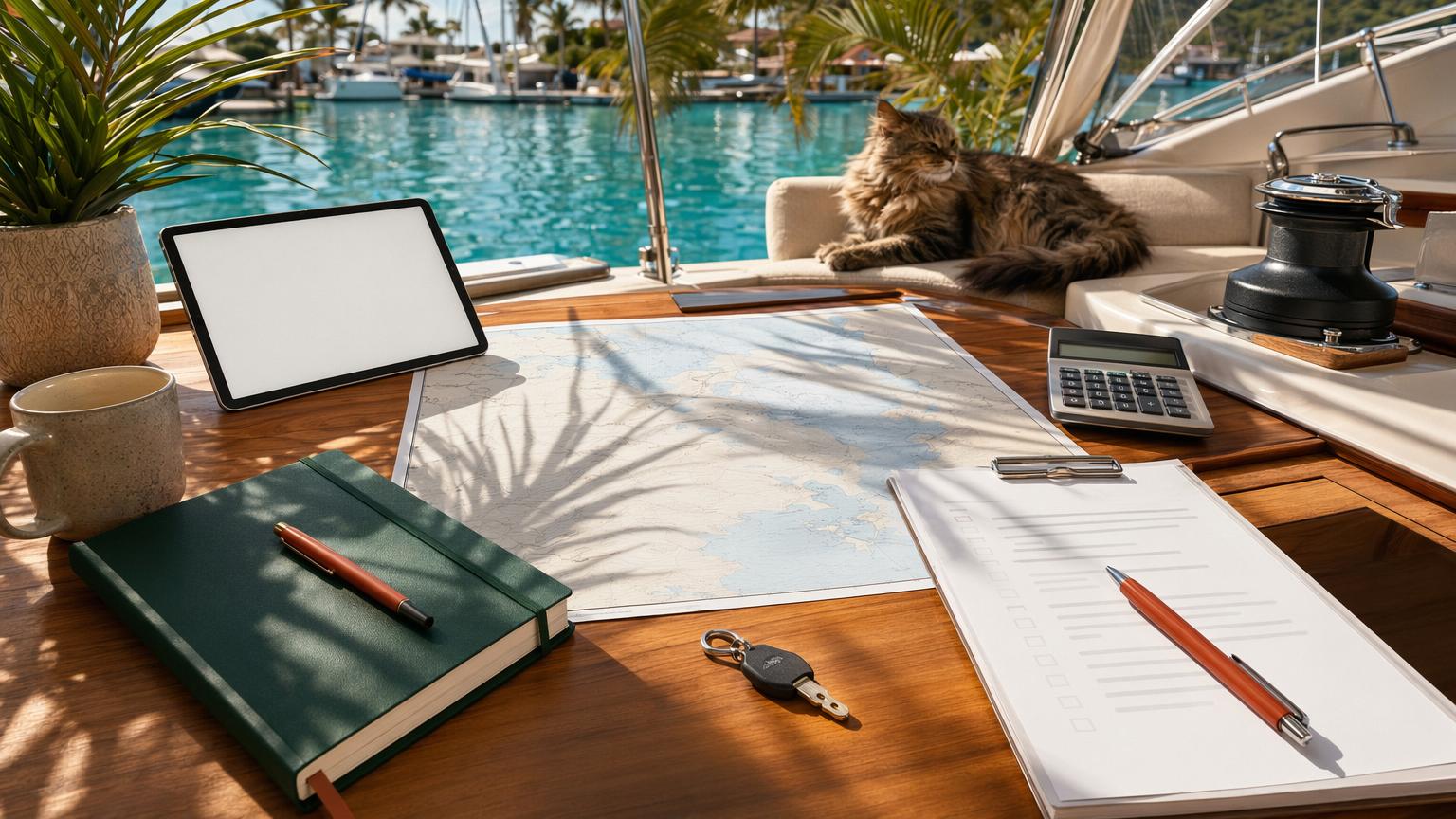
The cost of living on a boat depends on the boat, marina, location, maintenance load, insurance, utilities, weather exposure and how much work you can do yourself.
There is no honest single monthly number for every liveaboard. A 30-foot sailboat in a lower-cost marina, a 45-foot trawler in Seattle and a catamaran in South Florida can produce completely different budgets.
TL;DR: Build the budget from quotes. Start with moorage, liveaboard fees, insurance, maintenance, haul-outs, utilities, pump-outs, fuel, communications, upgrades and emergency reserve. Then stress-test the plan with a repair-heavy month before you buy.
Short Answer
A practical liveaboard budget has three layers:
- One-time costs: purchase price, survey, sea trial, taxes, registration or documentation, closing costs, transport and move-in upgrades.
- Monthly costs: slip or mooring, liveaboard fee, utilities, insurance, internet, fuel, pump-out, parking, laundry and routine supplies.
- Annual or irregular costs: haul-out, bottom paint, zincs, engine service, sails or canvas, batteries, electronics, storm prep and surprise repairs.
If you only count the marina bill, the budget will look smaller than the real life aboard.
Why Boat-Living Costs Vary So Much
Four choices shape most of the budget.
Boat Size
Many marina, haul-out, bottom cleaning, detailing and storage charges are based on length. A 50-foot boat can cost far more than a 35-foot boat even before repairs, because the systems, dockage, paint, lines, batteries and canvas usually scale up.
Location
Marina costs vary by city, season, berth type, amenities, taxes and availability. The same length boat can cost very different amounts in a municipal marina, private resort marina, mooring field or low-service yard.
Liveaboard Status
Some marinas charge a liveaboard fee, require a permit, limit the number of liveaboards or prohibit full-time residence. A berth price without liveaboard approval is not a liveaboard budget.
Boat Condition
A cheap boat with old batteries, tired rigging, neglected plumbing and a wet bilge can become expensive fast. A more expensive boat with current survey, working systems and realistic spares can be easier to budget.
The Budget Categories
Use this as your first worksheet.
Boat price, survey, sea trial, taxes, registration, documentation, broker or closing fees
Quote the exact boat and state or country
Monthly dockage, mooring ball, winter storage, taxes, deposits
Get rate sheet from target marina
Permit, extra person fee, mail fee, parking, guest limits
Ask the marina directly
Hull, liability, navigation area, storm plan, lender requirements
Get written quote before buying
Engine, rig, hull, pumps, hoses, batteries, bottom cleaning, zincs
Use service records, survey and owner quotes
Lift, blocking, pressure wash, bottom paint, labor, storage
Ask local yard for boat length and beam
Shore power, metered electricity, water, pump-out, trash
Use marina rate sheet and liveaboard habits
Engine fuel, generator, dinghy, heating, cooking
Estimate from movement and climate
Cellular, marina Wi-Fi, satellite, backups
Test where the boat sits
Life jackets, fire gear, flares, alarms, VHF, charts, training
Check local and voyage requirements
Leaks, pumps, batteries, engine failures, storm prep, haul-out surprises
Keep cash outside the monthly budget
Discover Boating’s ownership cost guide groups boat costs into upfront purchase costs, annual maintenance, storage and usage costs, which is a useful first frame for buyers building a budget. It also warns buyers not to tie up needed cost-of-living funds in a discretionary boat purchase. See Discover Boating’s boat ownership cost guide.
What Marina Costs Can Look Like
Use published rate sheets as proof that local quotes matter.
At Shilshole Bay Marina in Seattle, the Port of Seattle lists monthly moorage at $603.92 for a 30-foot slip, $958.69 for a 40-foot slip, $1,406.55 for a 50-foot slip and $1,811.76 for a 60-foot slip, with liveaboard listed as "Call Office." See the Port of Seattle monthly moorage rates.
In Miami, city marina pricing listed for November 2025 shows long-term non-liveaboard pricing at $27.50 per foot per month and long-term liveaboard pricing at $33.50 per foot per month, before taxes. The same page lists utilities for liveaboards at $27 per month and pump-out for non-customers at $7. See the City of Miami marina rates.
Fort Pierce City Marina’s September 2025 dockage sheet lists vessels 25 to 67 feet at $23.75 per foot for 5 to 11 months, and vessels 68 feet or larger or catamarans with a 19-foot beam or greater at $43.50 per foot monthly. The sheet also lists a $185 liveaboard fee for two people and utility charges by power setup. See the Fort Pierce City Marina dockage rates.
The Port of Kingston’s 2026 marina rates show permanent open moorage examples from $309.27 total for a 24-foot dock size to $995.25 total for a 60-foot dock size, plus a $200 monthly liveaboard charge during off-season guest monthly moorage. See the Port of Kingston 2026 marina rates.
Those examples are not a promise for your boat. They show why "what does it cost to live on a boat?" has to start with location, length and permission.
Maintenance And Repair Reserve
Maintenance is the cost that many first-time liveaboards undercount.
Boatsetter’s maintenance guide gives a common planning rule: annual boat maintenance can be estimated around 10% of the boat’s price, with boats over 40 feet often carrying a 20% to 40% premium over smaller boats. The same guide notes that many maintenance items are priced per foot and that geography, boat condition, engine count and age all matter. See Boatsetter’s boat maintenance cost guide.
Use that 10% idea as a stress test, not as a quote. A $40,000 older sailboat does not automatically cost $4,000 every year. It may cost less in a quiet year and much more when rigging, batteries, engine work or bottom paint land together.
Your reserve should cover:
- haul-out;
- bottom cleaning and paint;
- zincs and running gear;
- engine service;
- oil, filters, belts, hoses and impellers;
- batteries and chargers;
- bilge pumps;
- freshwater and head plumbing;
- canvas and leaks;
- safety gear replacement;
- survey findings;
- yard labor;
- transport or towing.
If the boat is older, saltwater-kept, complex or long neglected, raise the reserve.
Insurance And Lender Requirements
Insurance pricing varies by value, age, boat type, cruising area, storm exposure, survey findings, owner experience and coverage. Boat Trader’s ownership guide says annual boat insurance premiums commonly range from 1% to 2% of the boat’s value, while noting that size, experience, vessel age, cruising area and safety equipment can influence the final price. See Boat Trader’s cost of boat ownership guide.
Get insurance quotes before you buy, especially if:
- the boat is older;
- the boat is wood, steel, multihull or unusual;
- you plan to live aboard;
- you need hurricane coverage;
- you plan offshore or international travel;
- a lender is involved;
- the marina requires specific coverage.
No insurance quote means no real budget yet.
Waste, Pump-Out And Environmental Costs
Waste handling is both a cost and a rule issue.
In U.S. no-discharge zones, the EPA says treated and untreated sewage discharges from vessels are prohibited, and vessel operators must hold sewage for proper offshore discharge or use an onshore pump-out facility. See the EPA no-discharge zone page.
Budget for:
- pump-out fees;
- holding tank treatment;
- hoses and joker valves;
- head repairs;
- marina pump-out schedules;
- mobile pump-out if offered;
- dinghy fuel or time if pump-out access is not at your dock.
Ask the marina what is included and what costs extra.
Three Sample Budget Frames
These are planning frames, not quotes.
Smaller boat, modest marina, simple systems, owner does some work
Repair shocks and limited comfort
More space, better marina, shore power, paid maintenance help
Higher monthly burn and insurance
Anchoring, mooring, marinas as needed, more self-reliance
Weather, equipment, fuel, repairs underway
The cheapest plan can become expensive if it depends on luck. The more comfortable plan can become fragile if the monthly cost leaves no repair reserve.
A First Monthly Budget Template
Copy this into a spreadsheet.
Marina rate sheet
Marina office
Metered or flat marina rate
Marina rate sheet
Written quote
Carrier quote and dock test
Expected use
Marina and local costs
Survey and service records
Local yard quote
Cash target
Your current spending
Then add an annual worksheet:
- haul-out;
- bottom paint;
- survey updates;
- engine service;
- registration or documentation;
- insurance renewal;
- marina deposits;
- storm prep;
- upgrades;
- replacements.
The Repair-Heavy Month Test
Before buying, run this test:
- Put the normal monthly budget in a spreadsheet.
- Add one repair: pump, battery bank, engine service, rigging, haul-out or electronics.
- Add one marina surprise: deposit, liveaboard fee, utility charge, parking, pump-out or move requirement.
- Add one life expense from land.
- Check whether cash still works.
If that month breaks the plan, change the boat, location or timeline before you stretch the budget. For Dutch readers, or anyone keeping the Netherlands as their shore base (just like we do), keep that land-base decision separate from the boat budget: renting storage, keeping a home, or buying a house in the Netherlands is a different financial decision than moving aboard.
How To Lower The Cost Without Fooling Yourself
- Choose a smaller, simpler boat.
- Buy for condition before length.
- Confirm marina and insurance before buying.
- Learn small maintenance tasks.
- Keep systems simple.
- Avoid financing that leaves no repair reserve.
- Spend nights aboard before purchase.
- Start with a seasonal trial.
- Keep an exit fund.
Do not save money by skipping safety, insurance, survey, bilge checks, weather planning or maintenance.
Next Step
After you build the first budget, use the Yacht Living Readiness Checklist to check whether the money, boat, marina, safety and daily-life pieces fit together.
Then read:
FAQ
What Is The Biggest Cost Of Living On A Boat?
For many marina-based liveaboards, the largest recurring line is the berth or moorage. For others, maintenance, insurance, haul-out or repairs can become the larger annual cost.
Is Living On A Boat Cheaper Than Renting?
Sometimes, in some places, with the right boat and berth. It can also cost more once you add repairs, insurance, utilities, upgrades, haul-outs and a reserve. Compare the full annual cost instead of the monthly slip fee alone.
How Much Should You Budget For Boat Maintenance?
Use actual service records and survey findings first. As a rough stress test, many boating guides use around 10% of boat value per year, with higher risk for larger, older or complex boats. Treat it as a planning check, not a guaranteed bill.
Do Liveaboards Pay Utilities?
Often yes. Some marinas charge flat fees, some meter electricity and some add water, pump-out, parking, mail, laundry or liveaboard fees. Ask for the full fee sheet.
Should You Buy The Cheapest Boat To Live On?
Usually no. A cheap boat can be a good choice only if the survey, systems, berth, insurance and repair reserve make sense. A neglected cheap boat can cost more than a better-kept boat.
What Should You Price Before Buying?
Price the marina, liveaboard permission, insurance, survey findings, immediate upgrades, haul-out, bottom work, utility setup and emergency reserve before you make the purchase decision.
Use the checklist to pressure-test the boat, budget, location, safety plan and daily routine before the decision becomes expensive.