Best Liveaboard Boats To Live On
Compare the best liveaboard boats by space, stability, maintenance, marina fit, cruising plans, budget exposure and daily-life comfort.
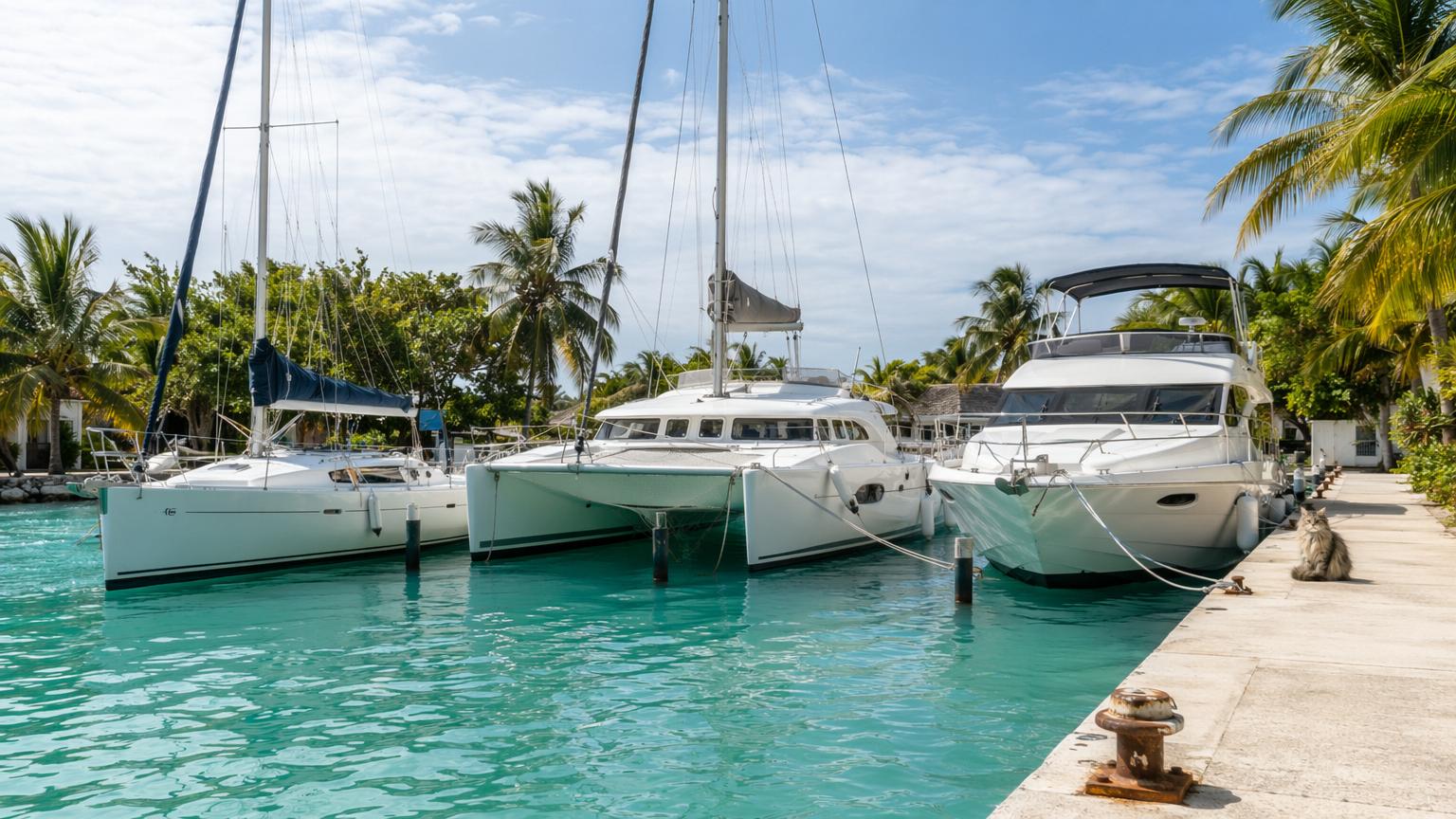
The best liveaboard boats are the boats that match your daily routine, budget, marina, weather, maintenance tolerance and cruising plans.
A boat can look perfect in a listing and still be wrong for full-time life. You are choosing a home, a machine, a storage system, a safety platform and sometimes a vehicle for travel.
TL;DR: Most liveaboard buyers compare sailboats, trawlers, motor yachts or cabin cruisers, catamarans and houseboats. Start with how you plan to live, then score each boat type by space, stability, maintenance, marina fit, range, systems, budget exposure and beginner tolerance.
Short Answer
If you want the simplest liveaboard short list, start here:
- Sailboat: good for wind-powered cruising, lower fuel use and sailing-focused life, with tighter space and more skill demands.
- Trawler: good for comfortable cruising, steady pace, interior volume and long stays aboard.
- Motor yacht or cabin cruiser: good for marina comfort, interior space and easier powerboat handling, with higher fuel and maintenance exposure.
- Catamaran: good for stability, space and remote-work comfort, with higher berth, beam and purchase-cost issues.
- Houseboat: good for protected-water marina living, with limited cruising and weather ability.
Boatsetter’s liveaboard comparison also groups common options into motor yachts and cabin cruisers, trawlers, sailboats, catamarans and houseboats. See Boatsetter’s liveaboard boat guide.
The Liveaboard Fit Matrix
Use this before you compare models.
Coastal cruising, sailing skill, lower fuel use, compact living
Narrow storage, motion, rig maintenance, energy limits
Comfortable long stays, protected steering, efficient slower cruising
Engine upkeep, dockage, older systems, fuel range planning
Marina comfort, more interior volume, family space
Fuel, engines, systems, insurance, larger slips
Stability, width, separate spaces, remote work, shallow draft
Purchase price, beam fees, multihull slips, two hulls of systems
Inland or protected marina living, house-like layout
Limited seaworthiness, resale, transport, location restrictions
The right choice is the one you can afford, berth, insure, maintain and enjoy on an ordinary day.
What Makes A Boat Livable
YachtWorld’s liveaboard yacht guide points to traits that matter for longer stays: sea-keeping ability, range, interior cabins, appliances, freshwater and wastewater capacity, onboard head and galley. See YachtWorld’s liveaboard yacht guide.
For a beginner liveaboard, those traits translate into practical questions:
- Can you sleep well in the berth?
- Can you cook without rearranging the whole cabin?
- Is there a real place to work, read or sit during bad weather?
- Can you carry enough water?
- Can you manage waste legally and comfortably?
- Is there dry storage for clothes, tools, spares and documents?
- Can you ventilate and heat or cool the boat?
- Can you access pumps, batteries, hoses, seacocks and filters?
- Can you handle the boat safely in your intended waters?
- Can you sell it if the lifestyle does not fit?
If a boat fails several of those questions, the photos are doing too much work.
Sailboats
Sailboats appeal to people who want movement, seamanship and the option to travel with less fuel dependence. They can be excellent liveaboard boats, especially for people who like compact systems and are willing to learn sailing, anchoring, rig checks and weather windows.
The tradeoff is space. Sailboats are often narrower than comparable powerboats, with much of the living area lower in the hull. Storage can be efficient, yet tight. Motion, heel, deck work and rig maintenance are part of the life.
Choose a sailboat if:
- you want to sail as part of the lifestyle;
- you accept smaller spaces;
- you can learn weather, anchoring and sail handling;
- you want a boat that can cruise beyond one marina;
- you are comfortable with slower movement.
Pause if:
- you need wide open interior space;
- you dislike motion;
- you cannot handle steps, companionways or deck movement;
- you need a large desk and constant power draw;
- you want a house-like layout.
Use the dedicated living on a sailboat guide before you make this choice final.
Trawlers
Trawlers are a common favorite for liveaboard life because many are designed for long stays, protected helms, efficient slower cruising and practical interiors.
Boat Trader’s trawler guide describes trawlers as boats with relatively large cabins designed for extended stays aboard and long voyages, often with slow and efficient displacement cruising speeds. It also notes that many trawlers have a private stateroom, full galley, enclosed head and saloon. See Boat Trader’s trawler guide.
Choose a trawler if:
- you want powerboat comfort without chasing speed;
- you value interior volume and protected steering;
- you expect longer stays aboard;
- you want a stable platform for coastal cruising;
- you prefer engine systems over sailing systems.
Pause if:
- fuel burn is a major worry;
- the boat has old tanks, old wiring or tired engines;
- the windows, decks or hatches leak;
- you cannot afford yard labor;
- the marina waitlist is long for your size.
Trawlers can be forgiving homes. Neglected trawlers can be expensive projects.
Motor Yachts And Cabin Cruisers
Motor yachts and cabin cruisers can feel more familiar to people moving from land because they often offer larger saloons, better headroom, separate cabins and easier dock-based living.
Boatsetter describes motor yachts and cabin cruisers as powerboats with accommodations such as a sleeping cabin, head and galley, while warning that larger boats bring larger maintenance needs. See Boatsetter’s liveaboard boat guide.
Choose a motor yacht or cabin cruiser if:
- you will live mostly in a marina;
- you want more light and interior volume;
- you need family or guest space;
- you prefer powerboat handling;
- you want faster movement between nearby places.
Pause if:
- the fuel budget is thin;
- the boat has multiple engines and complex systems;
- insurance quotes are uncertain;
- you need a low-cost berth;
- the boat is too large for your experience.
This type can be comfortable, and comfort costs money. Price the engines, generators, air conditioning, batteries, plumbing and canvas before you fall for the layout.
Catamarans
Catamarans offer stability, width, separate living spaces and strong appeal for people who work remotely or want less rolling at anchor. They can make daily life feel easier because the saloon, cockpit and cabins may be spread across a wider platform.
They also create berth and budget questions. Beam can limit marina choices or add cost. Two hulls mean more surfaces, more through-hulls and sometimes more systems. Purchase prices can be high.
Choose a catamaran if:
- stability matters a lot;
- you want separate work, sleeping and guest areas;
- you plan to anchor often;
- you can find and afford a suitable berth;
- your budget can handle multihull maintenance.
Pause if:
- your target marina has limited multihull space;
- haul-out options are scarce;
- your budget depends on a narrow monohull slip price;
- you are buying space without pricing systems.
A catamaran can be one of the most comfortable liveaboard choices when the location and budget fit.
Houseboats
Houseboats can be attractive for protected-water living because the layout may feel closer to a small apartment. They can have wide rooms, simple movement inside and more familiar furniture options.
They are usually weaker choices for exposed water, long-distance cruising, offshore plans or places with strict marina rules. Transport, insurance and resale can also be harder than expected.
Choose a houseboat if:
- you want protected marina or inland living;
- you do not plan offshore passages;
- local rules and insurance are clear;
- you value house-like space over cruising range;
- the berth is secure.
Pause if:
- you want to cruise widely;
- storms, wakes or exposed water are common;
- the marina has age or condition restrictions;
- resale options are narrow.
A Buyer-Neutral Scoring Sheet
Score each boat from 1 to 5.
Poor sleep ruins the lifestyle fast
You need normal meals, not weekend snacks
Comfort and waste rules meet here
Clothes, tools and papers need protection
Work, refrigeration, pumps and lights depend on it
Daily convenience and marina rules depend on it
Damp air damages gear and mood
Hidden systems become expensive
Length, beam, age and liveaboard status matter
No quote means no real plan
Your exit plan matters before purchase
Ignore any boat that scores well on looks and poorly on systems.
Questions To Ask Before Making An Offer
- Where can this exact boat be berthed as a liveaboard?
- What will insurance cost for this boat, owner and cruising area?
- What did the last survey find?
- What maintenance is due in the next 12 months?
- When were the rig, engine, tanks, batteries and hoses last serviced?
- How much dry storage is actually usable?
- Can two people move around without conflict?
- Can you work aboard for a full day?
- Can you handle the boat in close quarters?
- What breaks most often on this model or age?
- What is the exit plan if the lifestyle does not fit?
Ask these before the offer, not after the survey invoice.
Common Mistakes
Ranking Models Before Choosing A Lifestyle
Choose the life pattern first: marina, cruising, anchoring, seasonal use, remote work or family living. Then compare boats that fit that pattern.
Buying Too Much Boat
More length can mean more comfort. It can also mean more dockage, more paint, more systems, harder handling and higher insurance.
Ignoring Beam
Beam matters for catamarans, houseboats and wide powerboats. A boat that fits by length may fail by width.
Treating A Project Boat Like A Deal
A project boat can make sense for a skilled owner with cash, time and a yard plan. For a beginner who needs a home soon, it can trap money fast.
Forgetting The Ordinary Day
Picture the Tuesday routine: coffee, shower, work, groceries, rain, laundry, repairs, trash, damp shoes and a pump that needs attention. That is the real test.
Next Step
Use the Yacht Living Readiness Checklist after you pick a short list. Then check:
FAQ
What Are The Best Liveaboard Boats?
The best liveaboard boats are usually sailboats, trawlers, motor yachts or cabin cruisers, catamarans and houseboats. The right one depends on your location, budget, skills, cruising plans and daily routine.
What Is The Easiest Boat To Live On?
For marina living, many people find a comfortable powerboat, trawler or houseboat easier than a compact sailboat. For cruising, ease depends on handling, systems, weather habits and how much maintenance you can manage.
Are Sailboats Good Liveaboard Boats?
Yes, sailboats can be good liveaboard boats for people who accept smaller spaces, sailing skills, rig maintenance, power limits and more motion. They deserve their own planning path.
Are Catamarans Good For Living Aboard?
Catamarans can be very comfortable because they offer width, stability and separate spaces. They can also cost more to buy, berth, haul and maintain.
What Size Boat Is Best For Living Aboard?
There is no universal size. A solo marina liveaboard may be comfortable on a smaller boat than a couple working remotely with pets. Layout, storage, headroom, power, water, waste and marina fit matter as much as length.
Should A Beginner Buy A Project Liveaboard Boat?
Usually only if they have cash, time, skills, a safe place to keep the boat and a clear yard plan. A cheap project can become expensive when it also has to be your home.
Use the checklist to pressure-test the boat, budget, location, safety plan and daily routine before the decision becomes expensive.