Liveaboard Budget Guide
Plan liveaboard budget with Sailcation checks for budget, boat fit, marina rules, systems, safety, weather, storage and daily routines.
Planning liveaboard budget is easier when you treat it as a practical liveaboard decision: boat fit, cost, location, rules, systems, weather and the routine you will repeat after the first exciting week.
This Sailcation guide keeps the focus on what has to work in daily life. The goal is not to make the choice sound easy. The goal is to help you decide what to test before you buy, move aboard or change your timeline.
Use it with the broader Sailcation guides so the page stays connected to the whole liveaboard plan instead of becoming a single isolated choice.
Summary
Summary: Liveaboard Budget Guide should be judged through budget, boat fit, location, safety, systems, weather and the daily rhythm of living aboard. If those checks are weak, the better answer is usually to change the boat, location, budget or season before committing.
The main risk is moving too quickly from idea to purchase. A clean plan names that risk early and then tests it in the real setting.
Start with cost of living on a boat, then use the yacht living checklist when you want a structured pass through budget, boat fit, marina rules, safety and daily routines.
How To Use This Guide
Read this page as a decision filter for liveaboard budget. Use local rules, marina terms, insurance wording, survey advice, medical advice and professional training for decisions that need them. This page helps you ask better questions before your money and daily life are tied to the boat.
A useful liveaboard page should answer three things: what changes in normal life, what has to be verified before commitment and what should make you slow down. Those three questions are more helpful than a yes-or-no answer.
The decision lens
For this topic, the decision lens is budget, boat fit, location, safety, systems, weather and the daily rhythm of living aboard. Put those checks in writing. If you cannot verify one of them, mark it as a risk rather than assuming it will be fine later.
The stop signal
Your stop signal is any answer that makes the ordinary week unworkable: no allowed berth, weak budget, unclear insurance, unsafe access, unreliable power, poor ventilation, no repair plan or a boat that only works in perfect weather.
What Changes In Daily Life
The first change with liveaboard budget is that the boat becomes both home and system. Ordinary tasks sit next to equipment checks, weather checks and small-space compromises. That can feel satisfying if you like practical living. It can feel heavy if you expected the boat to behave like an apartment.
Space and access
Space means more than cabin volume. It is where wet gear goes, how two people pass each other, whether tools are reachable, whether the berth is easy to use and whether you can move safely when the deck is wet or the boat is busy.
Time and attention
The boat will ask for attention. Sometimes that means five quiet minutes checking lines, bilge, weather or batteries. Sometimes it means changing the day because a pump, leak, forecast or marina notice needs action.
Money and margin
The stable plan has margin. Budget for the expected costs, then add the boring reserves for parts, haul-outs, tools, insurance changes, shore transport, laundry, internet, damp control and the mistakes that happen while learning.

First Checks Before You Commit
Before you make this plan part of your life, verify the checks below in the actual location or boat type you are considering.
- Can the boat legally and practically stay where you expect it to stay?
- Does the marina, mooring field or anchorage allow the use you are planning?
- Can you get written answers about fees, insurance requirements, guests, pets, mail, repairs and storm procedures?
- Does the boat layout work when groceries, laundry, work gear and wet items are aboard at the same time?
- Can you manage power, water, waste, ventilation and internet during a normal week?
- Is the emergency plan clear for fire, medical issues, severe weather, leaks and loss of power?
- Do you have a repair reserve that is separate from monthly living money?
- Can you leave, pause or change the plan if the test month fails?
Written checks
Get written information where the answer controls the plan. Verbal reassurance can be useful, but written marina terms, insurance requirements, survey findings and service limitations are easier to compare when the decision gets expensive.
Physical checks
Walk the boat as if you are tired, carrying groceries and trying not to wake anyone. Open lockers. Reach seacocks. Sit where you would work. Make the berth. Stand in the galley. Test the shower. Look for the boring friction.
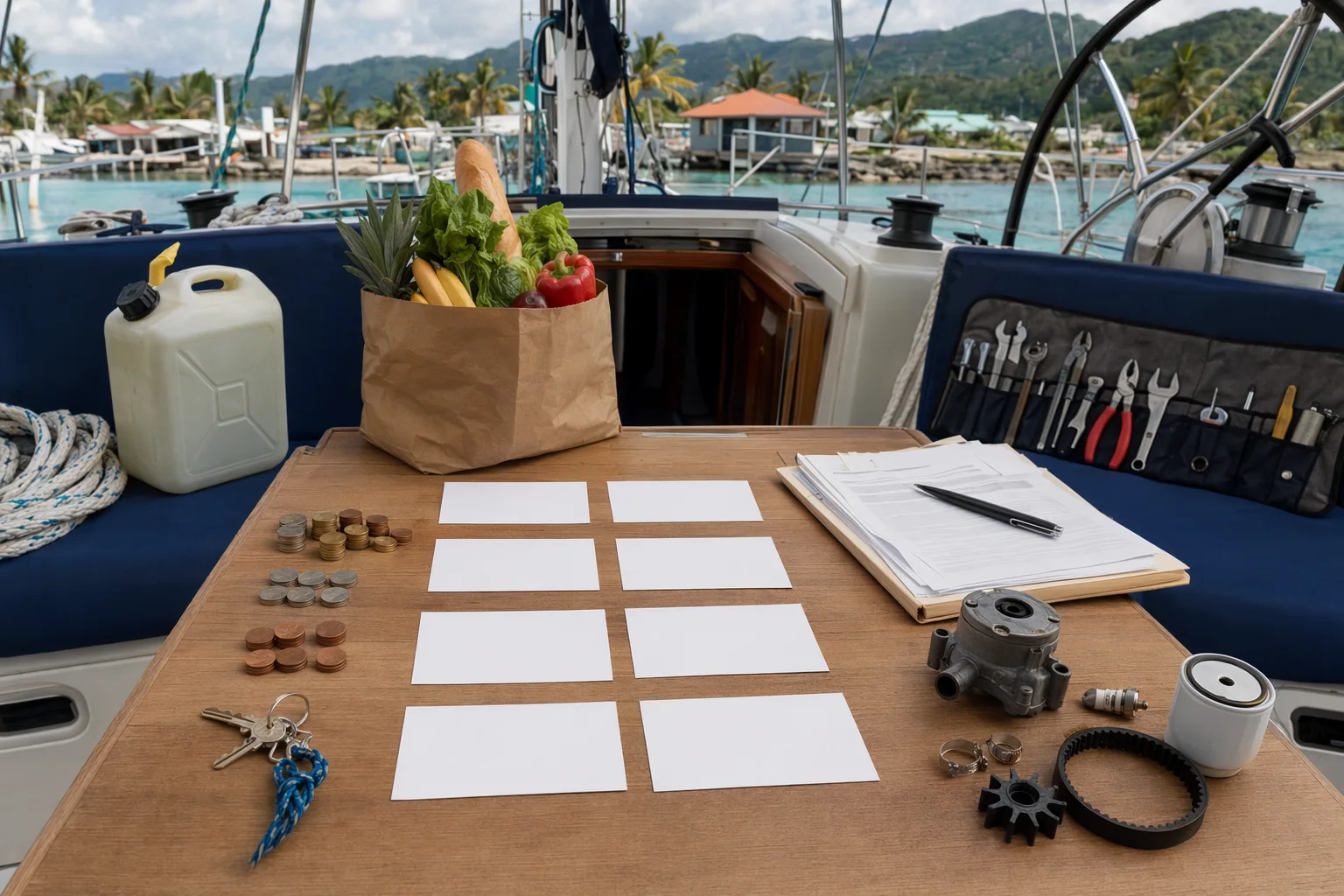
Practical Decision Board
Use this board before you decide whether the topic belongs in the first move aboard plan or should wait for a later season.
The layout supports the routine.
The boat only works when everything is packed away.
Spend several normal days aboard.
Rules, access and community fit.
Permission or shore access is uncertain.
Ask written marina or local questions.
Monthly and annual costs are separated.
The budget needs every month to be perfect.
Add maintenance and surprise reserves.
Power, water, waste and ventilation are boring.
One weak system controls the whole day.
Measure real use for a week.
The plan has seasonal and storm margins.
Bad weather turns normal life into stress.
Test poor-weather days before buying.
You can pause, sell, store or shift plans.
There is no fallback if the boat fails.
Write the exit decision in advance.
Cost, Time And Maintenance
Cost planning for liveaboard budget should be split into monthly costs, annual costs and surprise costs. Monthly costs can include berth or mooring, utilities, fuel, internet, laundry, groceries, transport and routine supplies. Annual costs can include insurance, haul-out, bottom work, registration, safety gear, servicing and planned upgrades.
The surprise category is the one that protects the lifestyle. Pumps fail, canvas wears, batteries age, lines chafe, leaks appear, electronics become unreliable and professionals may be needed when the job is beyond your skill. Do not treat that category as optional.
Time cost
Time is part of the cost. If the boat saves money but consumes every free hour, the plan may still be too expensive for your life. Count errands, maintenance, cleaning, drying, repairs, weather delays and learning time.
Maintenance access
A beautiful layout can become frustrating if the systems are hard to reach. Before buying or changing the plan, check access to batteries, pumps, filters, seacocks, engine space, tanks, wiring, bilge areas and deck hardware.
Location, Rules And Weather
Location decides more than many beginners expect. The same boat can feel easy in one marina, expensive in another, unsafe in a poor-weather berth and impractical at anchor without shore access.
Ask about liveaboard permission, seasonal limits, guest rules, pets, mail, storage boxes, bikes, heaters, air conditioning, shore power, pump-outs, storms, haul-outs and what happens if the boat is under repair.
Weather habit
Weather should be a routine, not a surprise. Use the official marine forecast source for your area and learn what wind direction, gusts, swell, lightning, heat, cold and visibility mean for your boat and berth.
Systems, Safety And Comfort
Liveaboard Budget Guide only works if the boat’s systems support the way you live. Power, water, waste, ventilation, heat, cooling, cooking, lighting, communications and emergency access should be tested as connected parts of the same routine.
For liveaboard budget, the useful question is not whether boat life sounds possible. The useful question is whether the ordinary week still works when the weather, budget and maintenance are included.
Comfort is evidence
Comfort is not a luxury word here. It is evidence that the plan can last. If the boat is always damp, too hot, too cold, too noisy, too cramped or too hard to keep clean, the strain will show up in work, sleep and decision making.

A Realistic Test Plan
Do not decide from a perfect-weather tour. Build a test that includes the normal friction.
- Stay aboard for several nights in the kind of weather you may actually live with.
- Work, cook, shower, shop, clean, dry laundry and store groceries from the boat.
- Ask written marina, insurance, survey, repair and service questions.
- Track power, water, waste, internet and storage pressure for a full week.
- List the first ten repairs or upgrades and price them before purchase.
- Choose the condition that would make you wait, change the boat or change the location.
Common Mistakes
- Treating liveaboard budget as a lifestyle label instead of a set of checks.
- Using a listing photo as proof of living comfort.
- Assuming marina permission, insurance or local rules will be easy.
- Ignoring damp, ventilation, storage and access because the boat looks tidy during a tour.
- Combining the boat budget with shore-base, storage or family costs until the numbers are impossible to read.
- Buying equipment before measuring the real load, space or routine.
- Making the plan depend on one connection, one berth, one repair person or one perfect season.
Related Next Steps
After this guide, connect the topic to the rest of the liveaboard plan. Useful next pages include cost of living on a boat, yacht living checklist, living aboard a boat, liveaboard maintenance costs, liveaboard marina costs.
FAQ
What does liveaboard budget involve?
Planning liveaboard budget guide means checking whether this part of liveaboard life fits your boat, budget, location and daily routine. Treat it as a decision check rather than a dream label.
Who should read this liveaboard budget guide?
Read it if you are comparing boats, locations or timelines and want to know what has to be checked before you rely on the boat as a full-time home.
What should I check first for liveaboard budget?
Start with budget, boat fit, location, safety, systems, weather and the daily rhythm of living aboard. Those checks decide whether the idea belongs in the current plan or needs a different boat, berth, season or budget.
What is the biggest mistake with liveaboard budget?
The biggest mistake is moving too quickly from idea to purchase. Slow down, ask written questions and test the ordinary week before you commit money.
How should I budget for liveaboard budget?
There is no single safe number. Build a monthly budget, an annual maintenance budget and an emergency reserve. Add location costs, insurance, power, water, internet and repairs before judging affordability.
Can this work for remote workers?
It can, but only if power, signal, backup data, dry workspace, ventilation and call privacy are tested in the exact place where you plan to work.
Can beginners plan this safely?
Beginners can plan it carefully, but they should get training, inspect with experienced help and avoid buying a boat that depends on skills they do not yet have.
Does marina choice matter for liveaboard budget?
Yes. The marina or mooring choice affects permission, fees, laundry, showers, groceries, mail, guests, pets, security, weather exposure and repairs.
What should I ask a marina before relying on liveaboard budget?
Ask whether full-time living is allowed, what insurance is required, whether there is a fee or waiting list, how pump-outs work and what happens during storms or repairs.
What should I test aboard before deciding on liveaboard budget?
Test a normal day, a workday, a rainy day and a tired evening. The best test is slow the decision down and test the routine before money is locked in.
How does weather change liveaboard budget?
Weather changes sleep, movement, dinghy access, power use, moisture, marina comfort, repair timing and whether a plan feels calm or stressful.
What safety gear matters for liveaboard budget?
Start with the required gear for your location, then add habits: weather checks, bilge checks, fire awareness, communication backup, first aid and a clear emergency plan.
How do costs affect liveaboard budget?
Sometimes boat life lowers one cost and raises another. Marina fees, insurance, haul-outs, maintenance, upgrades, storage and surprise repairs can remove the expected savings if they are not counted.
What boat type best supports liveaboard budget?
The best boat is the one that fits the daily routine, not the one with the nicest listing photos. Layout, systems access, ventilation, storage and marina fit matter more than labels.
How long should I test this plan?
A weekend is useful, but a week is better and a month is stronger. Include work, groceries, laundry, bad weather, errands and maintenance checks.
What documents should I keep for liveaboard budget?
Keep insurance details, marina terms, survey reports, equipment manuals, emergency contacts, maintenance records and written answers from any place or provider the plan depends on.
How do I avoid overbuying for liveaboard budget?
Buy after measuring the need. Count the load, space, weather exposure or routine first, then choose gear, upgrades or services that solve a real problem.
What should make me pause liveaboard budget?
Pause if the budget only works when nothing breaks, if liveaboard permission is unclear, if insurance is uncertain, if the boat has hidden defects or if the routine fails during a realistic test.
How does Sailcation suggest starting liveaboard budget?
Start with the smallest realistic test. Use the cost guide, compare boat types, ask location questions and write down the conditions that would make you change the boat, season or timeline.
What is the next step after this liveaboard budget guide?
Move from reading to evidence. Tour boats, ask written questions, price the boring costs, run a trial stay and use the readiness checklist before spending serious money.
Use the Sailcation checklist to test budget, boat fit, marina questions, safety, systems and daily routines before you commit.